
Portfolio
This portfolio presents a selection of my digital, print and creative works. Please allow a moment for the PDF flipbooks to load, then use the page controls to browse through each sample.
Online Courses
This collection of courses, built in MoodleCloud and Articulate 360, demonstrates my instructional design practice across accessibility, curriculum design and assessment — from planning and development through to evaluation and improvement.
Introduction to eCommerce
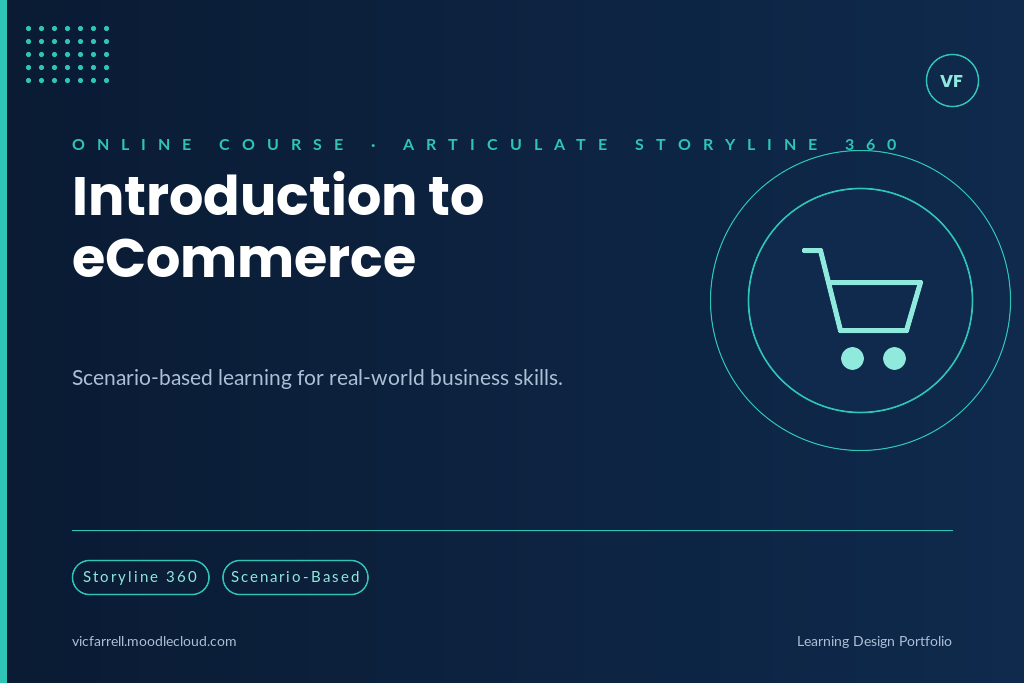
Introduction to eCommerce is a 6 Module Course built in Articulate 360 for Digital Technology teachers to offer as an alternative course for Years 9 and 10. The course provides skills and knowledge from the ACARA V9.0 Digital Technologies curriculum with a eCommerce context. It includes a focus on Design Thinking and can be run as a single semester or full year course.
Cyber Safety & AI Literacy for Educators
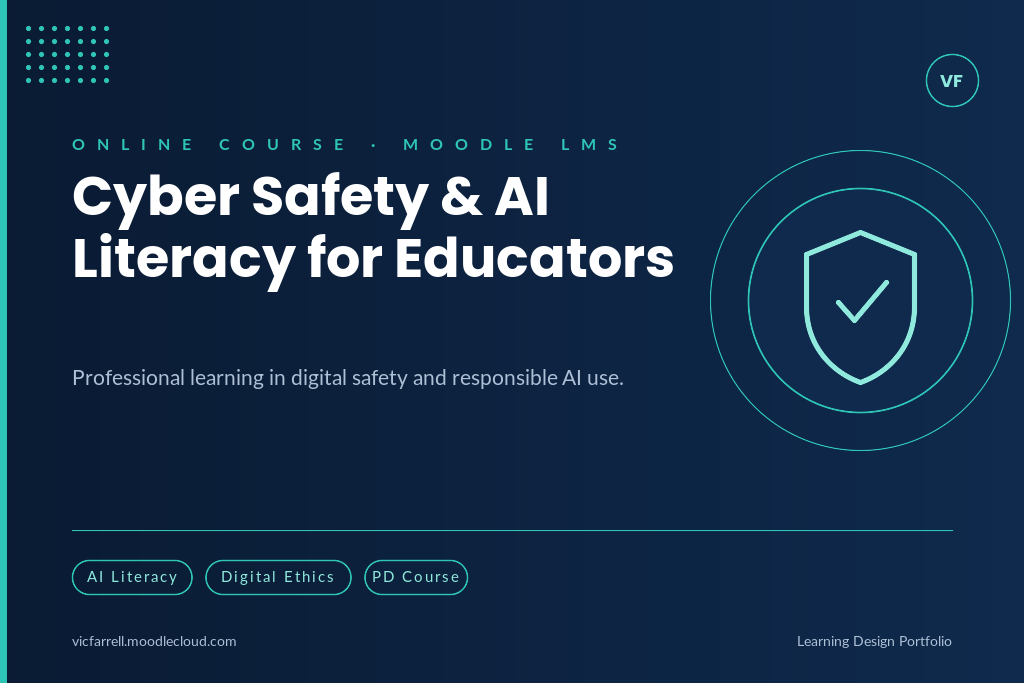
Cyber Safety & AI Literacy for Educators is a course developed in MoodleCloud to build teachers’ confidence and knowledge around cyber security and AI, so they can better support students navigating these issues. It covers practical strategies for identifying online risks, understanding how AI tools work, and embedding safe, responsible technology use into everyday classroom practice.
Digital Literacy for Educators
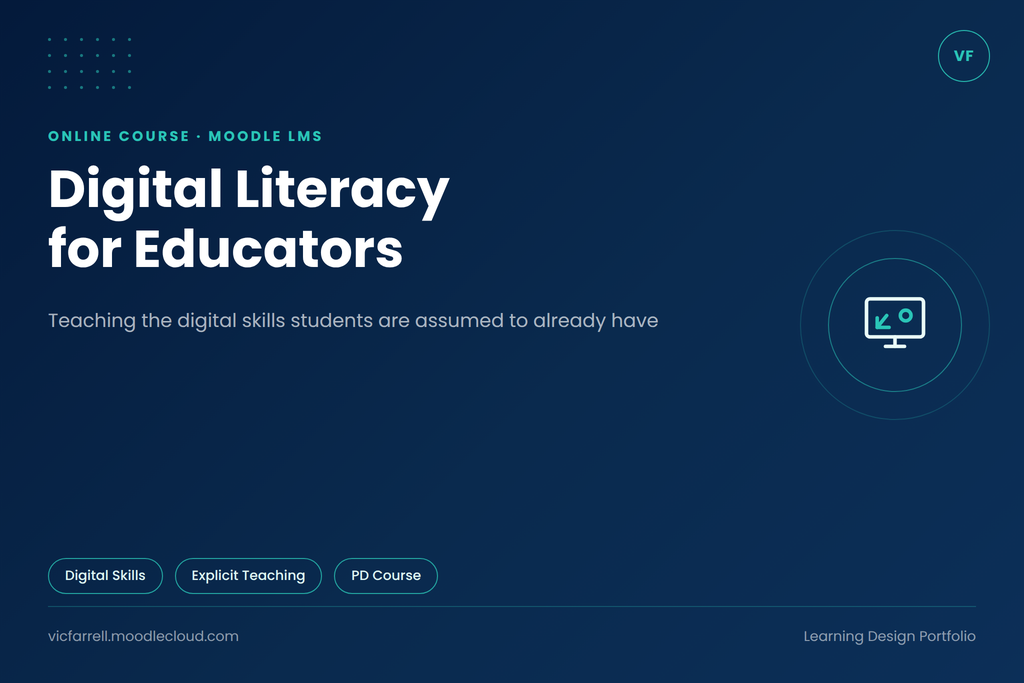
Digital Literacy for Educators is a wake up call for all schools. Stop assuming and start teaching digital literacy at every level. Students will never be autonomous, confident users of technology if the basic skills — managing files and folders, navigating the cloud, searching effectively, communicating professionally online — are simply assumed rather than explicitly taught.
Built in MoodleCloud for schools, the course argues that today’s students are fluent device users but rarely digital problem-solvers, and walks educators through closing that gap: the assumed-knowledge problem, core digital foundations, effective searching, and digital communication etiquette, before embedding these habits across every subject and year level.
Accessibility for Online Educators
Accessibility for Online Educators was built in Articulate 360 and features a wide range of accessibility practices modelled directly on Universal Design for Learning (UDL) principles, including full narration and captions, keyboard-only navigation, descriptive alt text for all images, high colour contrast for readability, and a clear, consistent structure throughout — designed as a working example of accessible course design, informed by both UDL and the Principles for Responsible Management Education (PRME).
Teaching with Micro:Bits
Teaching with Micro:bit is a course developed in MoodleCloud to support Digital Technology and STEM teachers. It includes a student workbook, classroom activities with clear learning outcomes, and a design-thinking final project where students apply their skills to a problem they identify from a range of provided contexts. The course is structured for a teacher to plan an entire unit of work around, with a fully worked assessment rubric included.
Professional Learning Resource: SchoolBox Portal Guide
During the COVID-19 lockdowns, I developed a comprehensive series of practical support guides to help teaching staff confidently transition from face-to-face teaching to online learning. This SchoolBox Portal Guide was one of several professional learning resources I authored to support staff in designing, managing and delivering engaging online learning experiences while teaching remotely.
Rather than simply documenting software features, the guide was designed using instructional design principles to provide clear, task-based learning that enabled teachers to quickly develop confidence with digital technologies. It combines step-by-step instructions, annotated screenshots, visual diagrams and practical examples to support just-in-time learning and independent problem solving.
The guide covers all aspects of managing online class pages, including organising learning materials, creating consistent course structures, embedding multimedia, developing online assessments and supporting effective student communication. It also promotes best-practice approaches to online course organisation to improve consistency and navigation for both students and teachers.
This resource formed part of a broader suite of digital learning guides that I created for staff, including manuals for Microsoft Teams, Canvas, SchoolBox, and other educational technologies. Together, these resources supported teachers in rapidly adopting new digital teaching practices and maintaining continuity of learning throughout the pandemic.
vic farrell publishing
2025 Digital Technologies Textbook 7 – 8
Developed to support teachers implementing the Australian Curriculum: Digital Technologies, this comprehensive Years 7–8 resource provides everything required to confidently plan, teach and assess a complete Digital Technologies program. Drawing on my extensive classroom experience, the publication is designed to save teachers valuable preparation time while delivering engaging, curriculum-aligned learning experiences.
The resource includes detailed teaching materials, student activities, assessment instruments, fully worked solutions and standards-based rubrics, enabling teachers to assess student achievement consistently and efficiently. Each unit has been developed to encourage computational thinking, problem-solving, digital systems knowledge and the practical application of digital technologies in authentic contexts.
Designed for immediate classroom use, this publication supports teachers from lesson planning through to assessment and reporting. It has become a practical, ready-to-use resource for educators seeking high-quality curriculum materials that are both engaging for students and aligned with Australian educational standards.

vic farrell publishing
Digital Technologies Textbook K – 6
Following the success of my secondary Digital Technologies publications, I received numerous requests from primary schools across Australia for a practical resource tailored specifically to the Kindergarten–Year 6 Australian Curriculum. Teachers were looking for a comprehensive textbook that introduced Digital Technologies concepts through engaging, age-appropriate activities while remaining accessible to classroom teachers with varying levels of technical expertise.
In response, I developed this textbook to support both teachers and students with clear explanations, practical classroom activities and curriculum-aligned learning experiences. The publication provides a structured pathway through the Digital Technologies curriculum, helping students develop computational thinking, problem-solving skills and confidence with digital systems from an early age. It has since been adopted by schools across Australia as a valuable resource for implementing Digital Technologies in the primary classroom..
Visual Basic Introduction to Programming Textbook
Developed to support the teaching of senior secondary programming, this Visual Basic textbook was written as a comprehensive classroom resource that enables teachers to teach directly from its pages. It combines clear explanations, step-by-step programming examples, practical activities and problem-solving tasks to help students develop both programming skills and computational thinking.
Designed to support programming courses from Years 10–12, the textbook addresses the common learning outcomes found across Australian state and territory curricula. It provides worked examples that demonstrate how to solve authentic programming problems while building students’ understanding of fundamental programming concepts, algorithms and software development techniques.
Adopted by teachers throughout Australia, the publication has become a trusted classroom resource for introducing students to programming and preparing them for senior secondary assessment. Its practical, curriculum-focused approach has enabled teachers to confidently deliver programming courses while supporting students of varying experience levels.
Digital Technologies Textbook 2020
Following the success of my 2019 textbook for VCE Software Development, I decided to consolidate my teaching notes, classroom resources and practical activities into a comprehensive textbook for students and teachers of Digital Technologies in Years 7–10.
Midway through the development of the book, ACARA released Version 9.0 of the Australian Curriculum. Despite these changes, schools throughout Australia and South-East Asia adopted the publication and successfully integrated its content into their teaching programs. More than six years after its release, the textbook continues to be used in classrooms, demonstrating the enduring value of its practical approach to teaching Digital Technologies.
Free Online Course: https://vicfarrell.moodlecloud.com/course/view.php?id=14

Software Development Textbook 2019
After teaching VCE Software Development for several years, I recognised a need for a comprehensive, practical textbook that aligned with the Victorian curriculum and reflected the way students learn through authentic software development projects. I began by sharing my classroom resources on a Wix website, which quickly attracted students and teachers from schools across Victoria.
The growing demand for these resources inspired me to publish them as a textbook. The result was a comprehensive resource combining theory, worked examples, practical activities and assessment tasks to support both classroom teaching and independent study. The success of the publication led to the development of additional Digital Technologies textbooks and established Vic Farrell Publications as a trusted source of curriculum resources for teachers and students.
Promotional Interactive Teacher Resources
External Relations Specialist
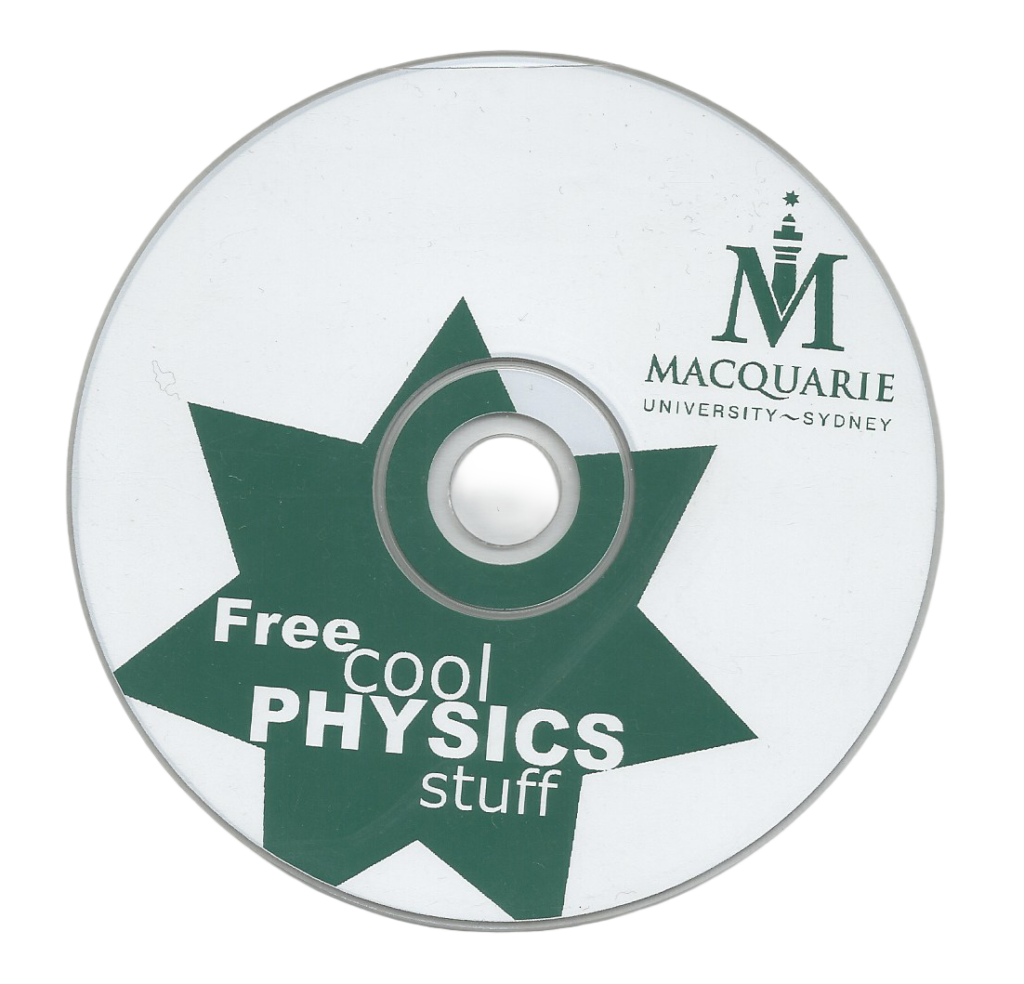
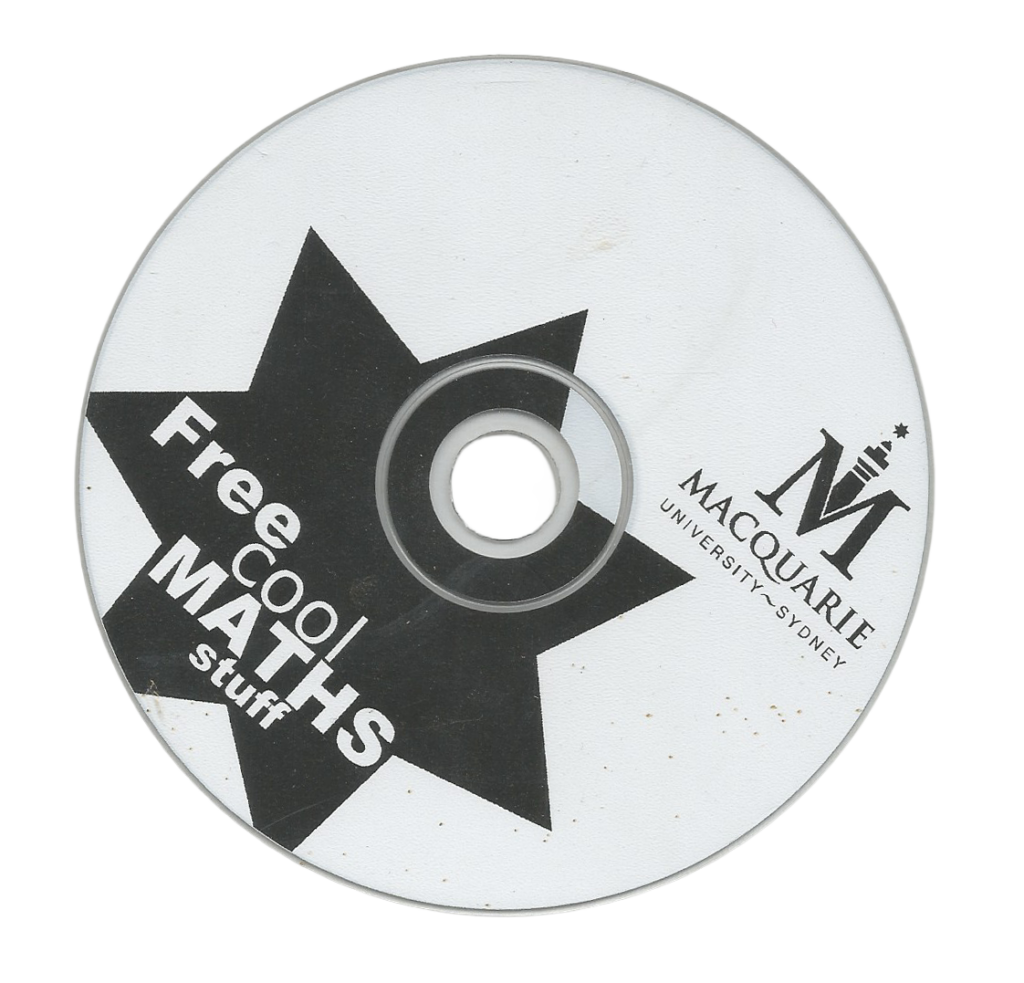
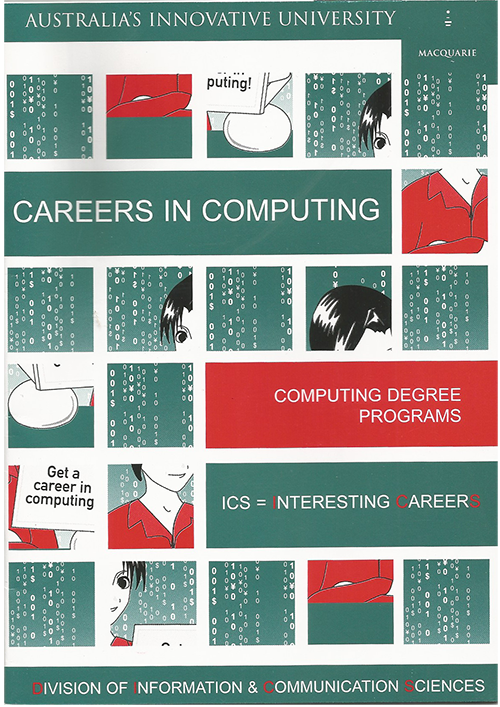
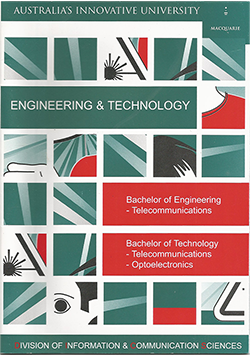
As External Relations Program Director for the Information and Communication Sciences Division at Macquarie University, I developed and led strategic outreach initiatives that strengthened relationships between the university, industry, and secondary schools across New South Wales.
My role focused on increasing first-round undergraduate applications through innovative teacher engagement programs, curriculum partnerships, and large-scale student recruitment initiatives. I designed and delivered professional learning programs for teachers in programming, databases, web development, mathematics, physics and engineering, helping schools align with emerging technologies while showcasing Macquarie’s ICT programs.
Alongside leading the annual student recruitment cycle—including Open Days, Advising Days and promotional campaigns—I managed multiple education and marketing projects, contributed to faculty strategic planning, and worked closely with academic staff, industry partners and university leadership.
Highlights
- Increased first-round undergraduate applications through strategic school engagement.
- Designed and delivered teacher professional learning programs throughout New South Wales.
- Managed major university recruitment events including Open Days and Advising Days.
- Directed the development of print and digital marketing resources.
- Managed education and outreach budgets exceeding $100,000.
- Contributed to the strategic direction of Information and Communication Sciences undergraduate programs.
- Served on university marketing and external relations committees.
- Built strong partnerships between schools, industry and the university to enhance STEM education pathways.
NSW NPWS Education Booklet 1993
As the Education Program Director for the Northern Rivers District NSW National Parks and Wildlife, I was responsible for media, writing educational and interpretive products and managed school and general public events. This publication was written and distributed in 1993. Download Sample.

NSW NPWS Kiosk
Murwillumbah Visitor Information Centre Touch Screen Kiosk (1997)
In 1997, while working with the NSW National Parks and Wildlife Service, I designed and developed an interactive touch screen kiosk for the Murwillumbah Visitor Information Centre. The kiosk was created in accordance with the NSW National Parks and Wildlife Service corporate style guide and integrated seamlessly with the organisation’s statewide website, ensuring a consistent visitor experience across both digital platforms.
The kiosk provided visitors with an engaging way to explore the natural and cultural heritage of the Northern Rivers region through interactive maps, park information, local history and visitor resources. Designed specifically for public use, the interface enabled users of all ages to easily navigate information and discover attractions, walking tracks and points of interest throughout the region.
At a time when interactive multimedia displays were still relatively uncommon, the project demonstrated how digital technology could enhance visitor engagement and improve access to environmental and historical information. It combined user-centred interface design, multimedia development and educational interpretation to create an innovative public information resource that supported tourism, environmental education and community engagement.


State of the Marine Environment Report for Australia 1996-7
As part of my B Arts Media Communications I developed an interactive version of the Summary by Prof. Leon Zann. I collected data from NASA, Bureau of Meteorology, NOAA OSPO and Australian Institute of Marine Science to add animations, up-to-date latest data including annual summaries of sea surface temperature data in live animation.
Projects